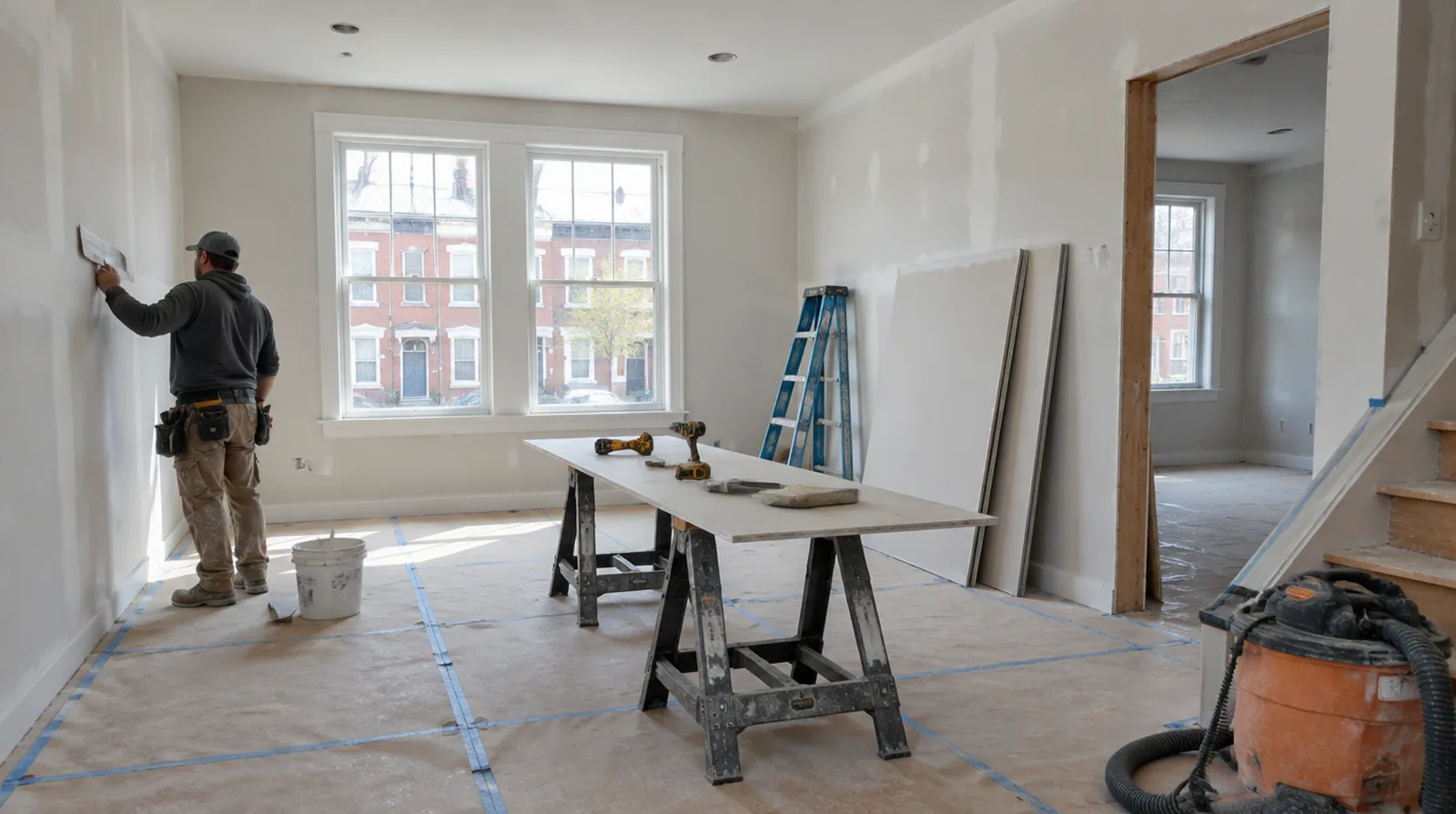
A plan built around the room, not only the patch
Before a room can be decorated confidently, the drywall work needs a clear purpose and a stable base. Reading Drywall Company brings together options for Reading interiors where a wall, ceiling or partition needs attention. Describe the defect, its history and the desired finished appearance before deciding how much material to replace. Some surfaces need a localized patch, while others need broader preparation or a cause investigated by another trade. The aim of the planning stage is to separate those situations, not to hide every problem under the same coating. A written scope can then explain both the physical repair and the condition the next decorating stage will receive.
Water Damage Drywall Repair: rebuild supported edges
New panel pieces need secure fastening to sound framing or appropriate backing. Stable edges reduce avoidable stress at the boundary between the retained face and the replacement. For this part of the project, assess the complete package of access and protection instead of relating cost only to the opening size. See the water damage drywall repair guide for the scope questions, preparation stages and finishing decisions specific to that work.
Drywall Repair: feather beyond the opening
Concealing a patch perimeter requires a tapered finishing area wider than the opening itself. A broad blend reduces the ridge that otherwise appears when light travels across the wall. For this part of the project, agree whether the finish ends against existing trim or whether that trim will be removed and replaced. See the drywall repair guide for the scope questions, preparation stages and finishing decisions specific to that work.
Drywall Installation: confirm concealed work
Required checks on concealed services and insulation should be completed while the wall surface remains open. Photographs and a written readiness check help avoid opening a newly installed wall later. For this part of the project, separate hands on labor from drying intervals instead of treating every visit as a full day of active work. See the drywall installation guide for the scope questions, preparation stages and finishing decisions specific to that work.
Popcorn Ceiling Removal: choose the final surface
A smooth ceiling and a new decorative texture involve distinct levels of preparation. Decide the intended appearance before pricing so the surface finishing supports the right result. For this part of the project, provide an overall room photograph and a detailed view of the defect so both context and scale are apparent. See the popcorn ceiling removal guide for the scope questions, preparation stages and finishing decisions specific to that work.
Soundproof Drywall: evaluate added thickness
Additional board layers can affect trim, outlets and the clear dimensions around doors. Include those interfaces in the scope so acoustic work does not leave unfinished perimeter details. For this part of the project, identify a workable separation between the protected room and the space that still needs daily access. See the soundproof drywall guide for the scope questions, preparation stages and finishing decisions specific to that work.
Drywall Finishing: choose joint materials
Bedding coats and final coats serve different purposes and may use different compatible compounds. Choose compatible compounds with regard to their intended purpose, the space and the relevant product instructions. For this part of the project, review a dried trial from the side in addition to the normal straight view of the wall. See the drywall finishing guide for the scope questions, preparation stages and finishing decisions specific to that work.
Ceiling Repair: check the source of damage
A visible overhead mark may be evidence of a problem in a service or space above the room. The cause needs resolution before cosmetic repair can reasonably be expected to last. For this part of the project, request an explicit description of what remains so the next decorating stage can be priced realistically. See the ceiling repair guide for the scope questions, preparation stages and finishing decisions specific to that work.
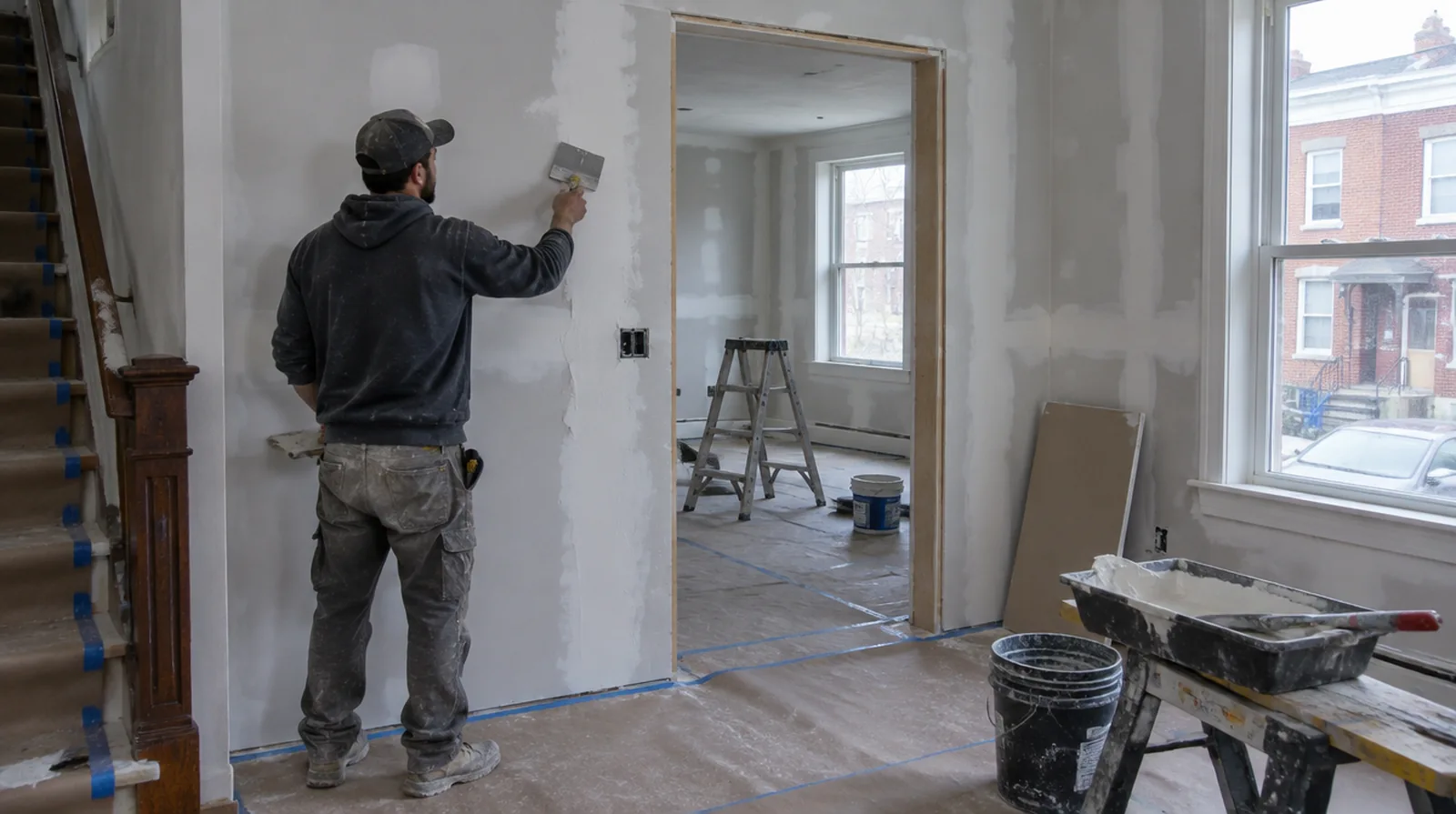
Skim Coating: check underlying movement
A skim coat improves the surface profile but does not repair structural movement or unstable board. Assess recurring cracks and complete necessary reinforcement before covering the area with a skim. For this part of the project, allow for intervals between coats as well as active labor rather than assuming the entire process happens continuously. See the skim coating guide for the scope questions, preparation stages and finishing decisions specific to that work.
Commercial Drywall: manage occupied areas
Dust protection and a defined work boundary are important when nearby rooms remain in use. Discuss noise and cleanup expectations in relation to the actual operations of the property. For this part of the project, set a workable boundary around construction while retaining the access people need for normal daily activities. See the commercial drywall guide for the scope questions, preparation stages and finishing decisions specific to that work.
Texture Matching: allow time before painting
Let a new texture become ready for decoration rather than applying paint onto soft material. Establish whether the proposal includes that decorative stage or hands the surface over to another trade. For this part of the project, tell the finisher its intended sheen and color while the substrate preparation standard is still being agreed. See the texture matching guide for the scope questions, preparation stages and finishing decisions specific to that work.
Access and drying conditions in Reading
Think through the daily use of the property while planning row-house renovation. Questions about steep front steps and narrow party-wall homes can change the setup even when the visible repair is small. In Reading, cold winters with humid summers makes it sensible to review the room environment rather than rely on an automatic overnight drying assumption. Access, protection and coat readiness each belong in the sequence. For blending drywall with original plaster, confirm who evaluates the condition before it is covered and what happens if the first inspection reveals more work. A delivery route, a safe storage location and an agreed work boundary help the renovation proceed without treating the rest of the building as an unplanned material staging area.
Compare the same finishing boundary
A meaningful comparison starts with what each proposal actually includes. Ask where damaged material will be removed, what remains in place, how the replacement is supported and what finish is expected before paint. Then check the edges of the scope: protection, disposal, primer, decorative coatings and the handling of fixtures. Those details can explain a price difference that the size of the patch alone does not. If hidden damage is discovered, agree how it will be assessed and documented before more work goes ahead. Clear boundaries are useful for a single room repair and just as important for a larger interior remodel.
Arrange the information before the next step
Before the next project discussion, collect information that helps distinguish the symptom from its history. Show the whole wall or ceiling as well as the damaged spot, give rough dimensions and note changes over time. Mention any recent work nearby and whether the surface has been patched before. Include the finish you want after painting and the parts of the property that need to remain usable. A photograph supports a conversation but cannot verify everything inside a cavity. For address and service area information, use the contact page. The form sends project requests for review; please do not include sensitive information.
Read about the project approach or view contact and planning details.
More planning details for Reading
A crack that follows a ceiling joist in an old row may reflect plaster keys that have let go rather than surface wear. Street parking near Reading row houses is limited on weekdays, so material delivery should be planned in advance. Shared brick party walls carry noise to the neighbor, which makes agreed working hours part of a Reading project plan.